Friday, February 12, 2021

GENERATIONS OF COMPUTER

GENERATIONS OF COMPUTER
The Generation of computer are as follows-
(1)               First Generation           [1946 -1956]
(2)               Second Generation      [1956 -1964]
(3)               Third Generation         [1964 -1971]
(4)               Fourth Generation        [1971- Present])
(5)               Fifth Generation          [Present & future ]
 

First Generation

During the Second World War, Computers with electronics valves (Vacuum tubes) were built. The speed of this computer measured in mille seconds. The size of computers was very big failure rate very high & reliability was very low. I had no limited & only machine language could be used.

Second Generation

The second generation of computer was based Transistors and were developed in 1956-1964.The speed of this computer was measured in micro seconds .The size of computer was very large, Failure rate very high and reliability was low. The languages used were FORTRAN & COBOL Internal storage was limited.

Third Generation

The Third Generation of computer was developed in 1964-1971 and was built using I.C.(Integrated circuits). Its speed was measured in nanoseconds. The size of computer was medium failure rate was low & reliability was very high. Internal storage was good.

Fourth Generation

The Forth Generation of computers was developed in 1971 to outwards and was built using LSIC (Large Scale Integrated Circuits). The speed of this computer measured in picoseconds. The size of computer was small, failure rate was very low, and reliability was very high. Internal storage was high.

Fifth Generation

Fifth generation of computers includes advanced computer technology of present time and upcoming computers. Today’s computers are so advanced that they can even work almost with in every specialized area whether accounting, engineering, architecture, researches, medicines etc.
    In the beginning of the generation, computers were interconnected to share data and information with each other. New ULSIC-Ultra Large Scale Integrated circuits aw replacing VLSIC chips. The size of computers are also minimizing day by day. We can see, watch-sized computers are available in market today. Using portable computers and Internet, we can exchange information, documents and even money beyond the boundaries.
 
PERSONAL COMPUTER
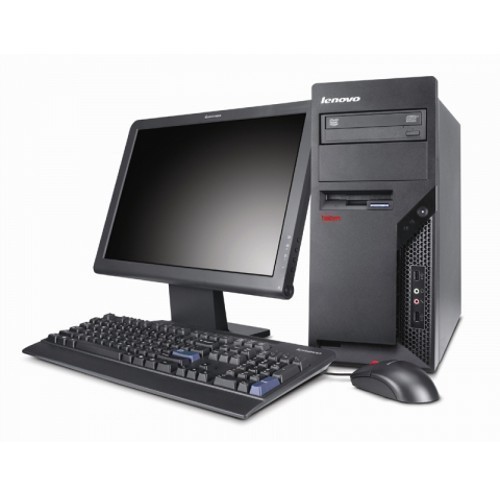
Personal computers are also known as home computers any Micro-Computer that is used for personal causes or for small purposes like word processing, Accounting and running general Applications.
Personal computer are normally operated by one user at word-processing, Internet browsing, multimedia playback. Computer game play, computer programming etc.
Uses of Personal Computer
Personal computers are normally operated by one user at one time to perform general purpose tasks such as word processing. Internet browsing, Internet faxing, email and other digital messaging, multimedia playbook, computer game play, computer programming etc.
Components of Personal Computer
There are mainly two types of components in personal Computer-

  • Basic  Components
  • Optional Components

Basic components are follows-

1. Keyboard
2. System Unit
3. Monitor

Optional components are follows-

1. Printer
2. Scanner
3. Joystick
4. Light pen etc.

Types of Personal Computer
Personal computers are mainly three types.
  • Desktop
  • Laptop
  • Palmtop

TYPES OF COMPUTER

 TYPES OF COMPUTER

Computer is a multipurpose e machine and suited to almost all kinds of requirements. It is very difficult to classify them straight forward, therefore we classify it on the following based.
  • On the basis of Application
  • On the basis of Purpose
  • On the basis of Sizes
Classification of Computer On The Basis Of Application
(1)               Analog computer
(2)               Digital computer
(3)               Hybrid computer
ANALOG COMPUTER
These are computer which can work with continuously variable physical parameters   e.g. Pressure, Temperature, Length, voltage etc. Analog computers mainly being used in the field of science and engineering.
DIGITAL COMPUTER
Digital Computer works with digits. The data in digital computer is represented in the tern of 0&1. Digital computer is actually for business purpose.
HYBRID COMPUTER
Hybrid computer contains the combination of all the good qualities of digital computers and Analog computer.
(Note-Hybrid Computer is used in medicine and surgery. The analog devices of computer mainly temperature and blood pressure and the digital parts convert them in numeric value. They jointly monitor the condition of the patient.)

Classification of Computer On The Basis Of Purpose
  • General Purpose Computer                             
  • Special Purpose Computer
GENERAL PURPOSE COMPUTER
General computer are designed to solve a wide range of problems. They are most widely used computer and can perform different types of processing. They are used for Designing, Mathematical Analysis, Payroll, Accounting, Game & Education etc.
SPECIAL PURPOSE COMPUTER
Special purpose computer are specially designed to perform a specific tasks. This type of computer is used in the studios for music recording. This computer can be attached to various musical instruments and other devices. It can also edit the recorded music by inserting special effects. Similarly in film industry, Special purpose computers are used for film editing. Special purpose computer are used are as under-
1. Space exploration                4. Meteorology                        7. Traffic Control
2. Agriculture                           5. Satellite operations            8. Medicine & Surgery
3. Oceanography                     6. Engineering
 
Classification of Computer on Basis of Size
This classification has following categories-
  • Micro computer
  • Workstations
  • Mini computers
  • Main frame computers
  • Super computers
  • Embedded computer
Micro Computers
Micro computers are being used in homes offices and schools etc. They keep an eye on the house hold Budgets. Micro computer has only one CPU. At personal Micro computers are still under development. A book sized, A phone sized and even a    watch-sized computers are being developed. They are found in different sizes and forms as being discussed ahead-
1. Desktop computer
2. Laptop /Notebooks
3. Palmtop computers
Workstations
Workstation are like Micro much powerful than those specially used for running complex programs. These are single user computer having a lot of feature of personal computers. These Powerful machines are greatly used by the scientists, engineers and other professionals they are very expensive.
Mini Computer
These are medium sized computers. They pass more work efficiency in comparison with Micro computers.
            Mini Computer is more expensive than a micro computer and more and one cannot thick of purchasing computers a mini computer for personal Use. These computers are generally useful for
Small or medium-Sized Computers. More than one person can Use this Computer at a time. [Following purposes- Emp. Payroll, Cost analysis, Sales supervision.
 
Main frame Computer
These are large computer with bigger storage capacity. These can store huge database and can also process the data with more speed.
            Mainframe can easily be attached to any network and even to micro computers. Mainframe are widely used by companies for the following purpose-
  1. To maintain customer details
  2. To maintain payment details
  3. To process bills
  4. To process Notices
  5. Employee’s payroll
  6. To maintained detailed record of tax etc.
Super Computers
Super computers are computers with biggest capacity & highest working speed among all the categories of computers. It has multiple CPU arranged & working parallel to each other. Super computers are used in following fields –
  • In the mapping of human genome.
  • The modeling mapping nuclear fission and other complex process .
  • In weather for casting.
  • In other big research programmer’s.
  • In space research and space exploration.
Super computers are the costliest computers developed by C-DAC in India are ‘PARAM’. The developed version of ‘PARAM’ has also been introduced, known as “PARAM-10000”.
            Other examples of super computer include Cray -2, Cray XMP -24, Cray T3 E and NEC -500
Embedded Computers         
An Embedded computer is a special purposes computer system designed to perform a dedicated function.
Embedded systems range from portable devices such as digital watches & MP3 players, to large stationary installations like traffic lights, Factory Controllers or the system controlling nuclear power plants. In terms of complexity embedded system run from simple, with a single microcontroller chip.

Devlopments of Computer

 Development of Computers

[1] The history of computers date back to 500 BC. When the Chinese invented a              calculating machine called ABACUS. ABACUS, a device of counting beads in              strings or rods, was used to calculate and store the immediate results of                       mental arithmetic. It is still used by the nursery class children for playing and           for learning to count.

[2]In 1614, John Napier developed a table called as Logarithm.

[3]In 1615, Henry Briggs improved the logarithm table with the base of 10.

[4]In 1617, Johan Napier developed a calculating device called as Napier’s bones             Scale.

[5]In 1620, Edmount Gunter, developed a calculating device named as slide                     rule (without moving scale)

[6]In 1632, William Oughtred improve slide rule with addition of moving Scales.

[7]In 1642, Blaise Pascal a French mathematician builds up first mechanical                 calculating machine named as “Pascaline”. It could perform simple Addition &         Subtraction.

[8]In 1671, (1694) Gottfried Wilhelm Von-Leibnitz improved the Pascal machine.           Which can also perform multiplication & division?

[9]In 1820, Thomas Decolmer builds up a machine which was mush smaller than           the Pascal & Leibnitz.

[10]In 1822, Charles Babbage (Also Called as father of computer) builds up the                 “Difference engine”. This was purely a mechanical machine consisting of gears         and shafts and driven by steam. Charles Babbage Difference Engine is the first         computer to be thought of. The Difference Engine was able to compute the                 values of a polynomial expression to six decimal digits. It was a special purpose         computing machine.

                In 1833, Charles Babbage build up the general purpose computing machine and more advanced than the Difference Engine, The new machine was  “Analytical Engine”. It was also a steam-driven calculator able to perform 60  decimals each, and to handle any type of calculations and other mathematical  problems.

        “Charles Babbage known as the father of modern Computer Science.”

[11] In 1890, Herman Hollerith build up a machine named as punch card machine.

[12] In 1944, Prof. Harvard University build up a first electro-mechanical computer         named as “Make-I”. It was a capable of carrying out one multiplication in 6                 seconds and a division in 12 Seconds.

[13] In 1945, John Vincent Atanosoff and Clifford Berry developed an electronic                 machine which was named ABC-Atanosoff Berry Computer this was the first             digital electronic Computer.

[14]During 1945-46, Johan William Mauchly and JP Eckert developed first general         purpose Electronic Computer at the University of Pennsylvania named as                    ENIAC, (Electronic Numeric Integrator & Computer).

[15]In 1949, M.V.Wikes a Professor of Cambridge University developed another               electronic Computer EDSAC. (Electronic Delay Storage Automatic Computer)
[16]In 1950, another Electronic Computer EDVAC developed at University of                    Pennsylvania. (Electronic Discrete Variable Automatic Computer.)

[17]In 1915, The first commercial computer was developed by Lyons Electronic                Office computer named as “LEO”.

[18]In 1951, Universal Accounting Company developed a computer for accounting            named as UNIVAC – I.

[19]Form 1952-1980, IBM-701, IBM-1401, IBM-37, IBM-7090, was developed by             IBM. These are Micro Computers.

[Note-  In 1980, First super Computer was developed named as ILLIAC. RAM is the first super Computer developed INDIA.]

Thursday, February 11, 2021

COMPUTER BASICS

COMPUTER FUNDAMENTAL

Introduction

Computers are most powerful tools the man has ever created. They are being used in every part of our life & play important role in our day to day life. It has become essential for all of us to know what a computer is and how its works.

Definition of Computer

  • Computer is a high speed data processing electronic device, which takes raw data as input and after processing it gives us meaningful result as output.
  • Computer is an electronic machine by which arithmetic & logical processing can be done at the faster speed than human.
  • Computer is an electronic device which can converts raw data in to a meaningful  data by giving programming instruction step by step to obey and respect a logical solution to the problems.
  • Computer is an electronic device which can converts raw data into meaningful data.

[Raw data-A set of letters or a letter which has no meanings.]

Computer can do

  • It performs complex calculations rapidly with high accuracy.
  • It can store a large amount of date and information.
  • It can make decisions. It can provide information to the user.
  • It can draw and print graph. 

Feature of Computer

  • The salient features of a computer are-
  • Computers are fast and accurate it instructed properly.
  • They have infinite memory and it occupies very small space.
  • They can perform routine operations by giving simple instructions and don’t change output every time as in the case human beings.
  • They are not affected by emotional factor.
  • They are diligent.

Characteristics of Computer

Following are important characteristics of Computer-

1. Speed

     Computer has ability to perform routine tasks at a greater speed than human beings. They can perform complex calculations in seconds. Most modern computer performs millions of operation in a second. Due to high speed of computers. They are used in wide variety of applications. Due to high speed of computers they are used in wide variety of applications.

2. Storage

     Computer has a large storage capacity. Computer can store around millions and billions of words. Computer stores every bit of information on secondary storage device. Because of the fact that computers can store large amounts of data and retrieve the same of high speed. They have become very popular.

3. Accuracy

     Computers are accurate. They do not mistake in calculations. In Case, We want to calculate the multiplication of two 10 digit numbers. We may take a lot of time and there. Could be several changes of mistakes and miscalculations. But computers easily carry out any kind of operation whether arithmetic or logical.

4. Versatility

    Computers are very versatility. Computers are capable of performing almost any task is reduced in to series of logical steps.

    5. Diligence

Computer is a machine and it does not suffer from tiredness. In some applications, such as bank, Computers are used 24 hours a day & 365 days a    year, continuously without any problem.

Fundamental uses of Computers

In modern times, Computer has become an essential element. Every day in the world is influenced by computer whether he is a president of a nation, a clerk or a common man neither a national census activity of a nation nor effective railway reservation system can be done without computers, accurately. Universities and educational Institutions prepare mark sheet of student in minimum possible time with the help of computers. Many organizations rely totally on the computers for their day to day activity. Banks are controlling their transactions, using computers accurately and efficiently. Telecommunications are fully computerized. Daily TV serials and other programs are edited using computers and transmitted to us by satellite which is also a computer regulated device.

India is a developing country and facing lot of economic problems such as unemployment. But computers and related technologies have opened a lot of opportunities in India.

          Uses of computer in different fields are being discussed as follows-

1. Household and personal use                      

(1) In kitchen                                       (2) In cars (computerized cars)

(3) Computerized house                    (4) Personal robot servants

2. Computer in Education                             

(1) Learning about Computer            (2) Computer as a teacher

(3) Problem solving                             (4) E-education by computer

(5) Online examination by computer

3. Computers in Entertainment                     

(1) Games                                            (2) Movies

(3) Music                                             (4) Arts & Graphics

4. Computers in Science & Medicine

            (1) Science                                           (2) Medicine 

Data, Processing & Information

What is Data? :-

Data is the collection of facts, Figure and Statistics, which can be processed to produce information.

(Example: - In the educational environment    data    can   be Name of Students, Roll No., Marks obtained and so on.)

What is processing? :-

Processing is the manipulation of the facts, figures & Statistics. In simple terms it is nothing but manipulation of data. Some of the information involved in Processing  is -   

1. Calculation:-            Addition, Subtraction, Multiplication etc.

2. Comparison: -          Equal to, Greater than, Less than, Zero, Positive, Negative

3. Decision: -               True or False

4. Logic

What is Information? :-

Information is data, which is summarized in the way you want it, so that is useful to you in your work.   

Languages

We know that human beings understand natural languages like Hindi, English and Tamil etc. But computer does not understand these languages. These only understand machine language, which is language of 0 and 1. Following are few categories of computer language:-                  

                        1. Machine Language/ Low level Language
                   2. Assembly Language
                   3. High level Language
Machine Language/ Low level Language:-
There are only one language understand by the computer without using a    translation program. This Language is called machine language or machine code of Computers. Machine code is the fundamental language of Computer and normally is written in binary form 0 & 1.
Assembly Language:-
In this language symbols are used in place of binary digits to give instruction to the Computer Assembly language is much easier to use than the machine language but as machine cannot understand this language. Some special programs are needed to translate these instructions in machine language. These programs are known as assembler.
High level Language:-
It is the language in which instruction are given to a Computer by using certain English words & Mathematical. While writing a program in a high level language and convert the instruction in machine code. But Computer cannot (directly) understand high level language. Few of these languages are -
            1. BASIC             (Beginners All purpose Symbolic Instruction Code)
            2. COBOL           (Common Business Oriented Language)
            3. FORTRAN     (Formula Translator)
            4. C & C++